

Tomorrow, Geneva Watch Days opens for its seventh year, and its biggest yet, 71 participating brands running through September 6th.
It started in 2020 as an improvised response to Baselworld's cancellation, a handful of brands deciding to show their watches in Geneva anyway, without a trade show floor to do it on. Six years later it's grown into the industry's third major annual gathering, after LVMH Watch Week in January and Watches and Wonders in April, and it still runs on the same basic idea. There's no central hall. Brands host visitors in their own boutiques, hotel suites, and showrooms scattered across the city, with a public pavilion at the Rotonde du Mont-Blanc as the closest thing to a meeting point.
That structure is the actual story, not the new releases that will come out of it this week. A centralized trade fair rewards brands with the biggest booths and the deepest marketing budgets. A decentralized format built around individual showrooms rewards brands with something specific to say and the confidence to say it in their own space, without competing for foot traffic against a neighbor's flashier display. That's a meaningfully different selection pressure, and it's part of why this event has become a genuine showcase for independent watchmaking rather than a smaller version of the big spring fair.
For collectors who never set foot in Geneva, the releases that come out of this week still filter down fast, through retailer previews, brand announcements, and secondary market pricing that starts moving before most people have seen the watch in person. Worth watching this week even from a distance.
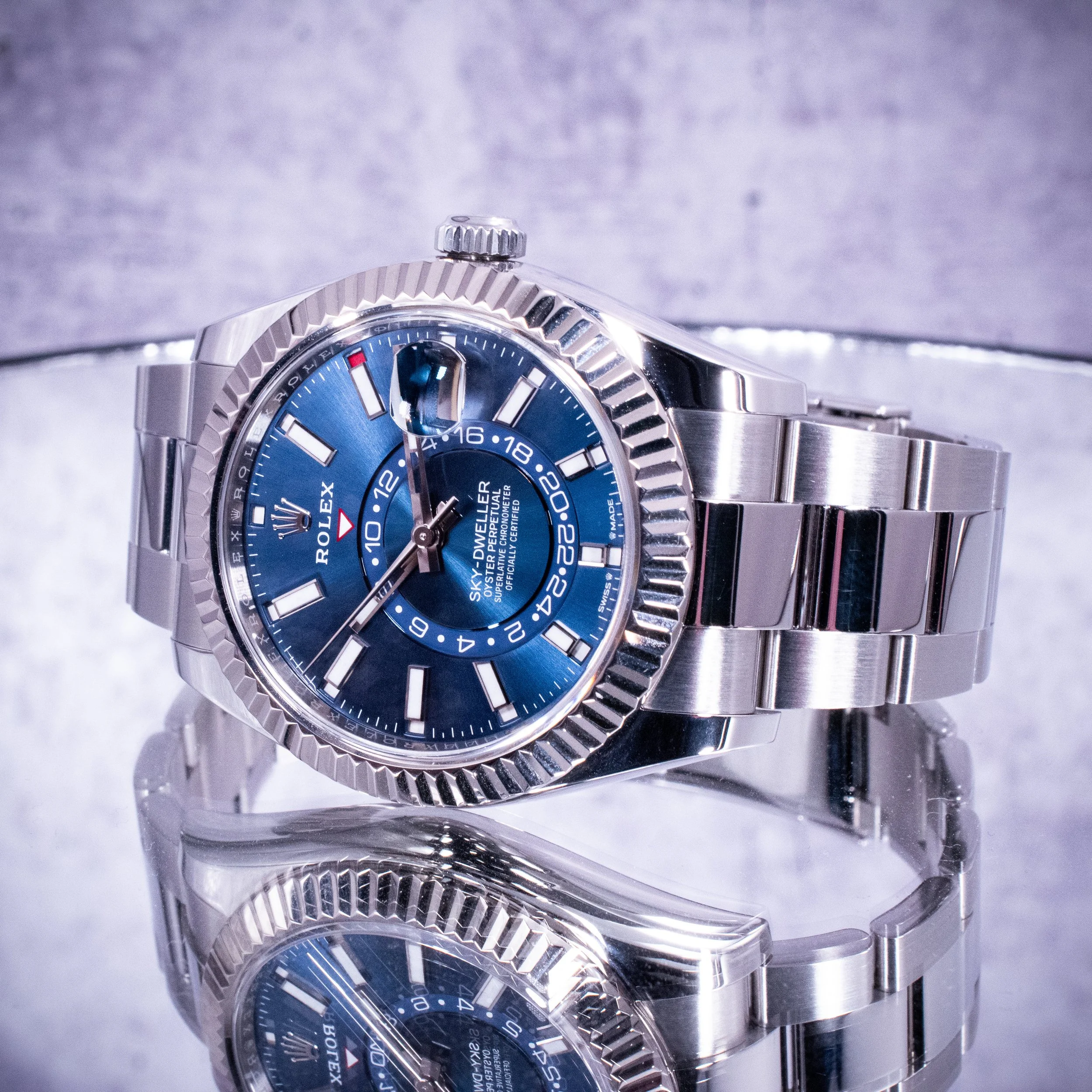
The bezel that isn't decoration. Inside Rolex's most complicated production watch.
Most watch bezels do one job, they rotate, or they don't. The Rolex Sky-Dweller's bezel does neither in the ordinary sense. It's a function selector wired directly into the movement.
Rolex calls it Ring Command. Turn the fluted bezel to a position, then turn the crown, and depending on where the bezel sits, you're either setting the local hour hand in one hour jumps, correcting the date, or adjusting the annual calendar, all without a single extra pusher on the case. The concept debuted in simpler form on the Yacht-Master II in 2007. On the Sky-Dweller it became a full three position interface controlling the watch's two headline complications.
The calendar itself is the more interesting engineering story. Rolex calls it Saros, and it's built to need exactly one manual correction a year, at the end of February, rather than the multiple corrections a standard annual calendar requires across the months with fewer than 31 days. The date change happens instantaneously at midnight, and because the calendar is tied to local time rather than home time, the date in the window always matches wherever the watch's local hour hand is set, not wherever the watch started the day.
Since 2012, this has run on two movement generations. Caliber 9001 launched the Sky-Dweller and stayed in production until 2023. Caliber 9002 replaced it that year, adding Rolex's Chronergy escapement and a redesigned, ball bearing mounted oscillating weight. Both generations hold roughly 72 hours of power reserve and meet the same Superlative Chronometer accuracy standard. The update was real but incremental, the kind of change that matters to a watchmaker more than it changes anything a wearer will notice day to day.
The reference we have in house, 336934, sits in the current caliber 9002 generation, produced in 2024.
www.elevatedtimewatchco.com | (484) 592-4800 | #ElevatedTimeWatchCo
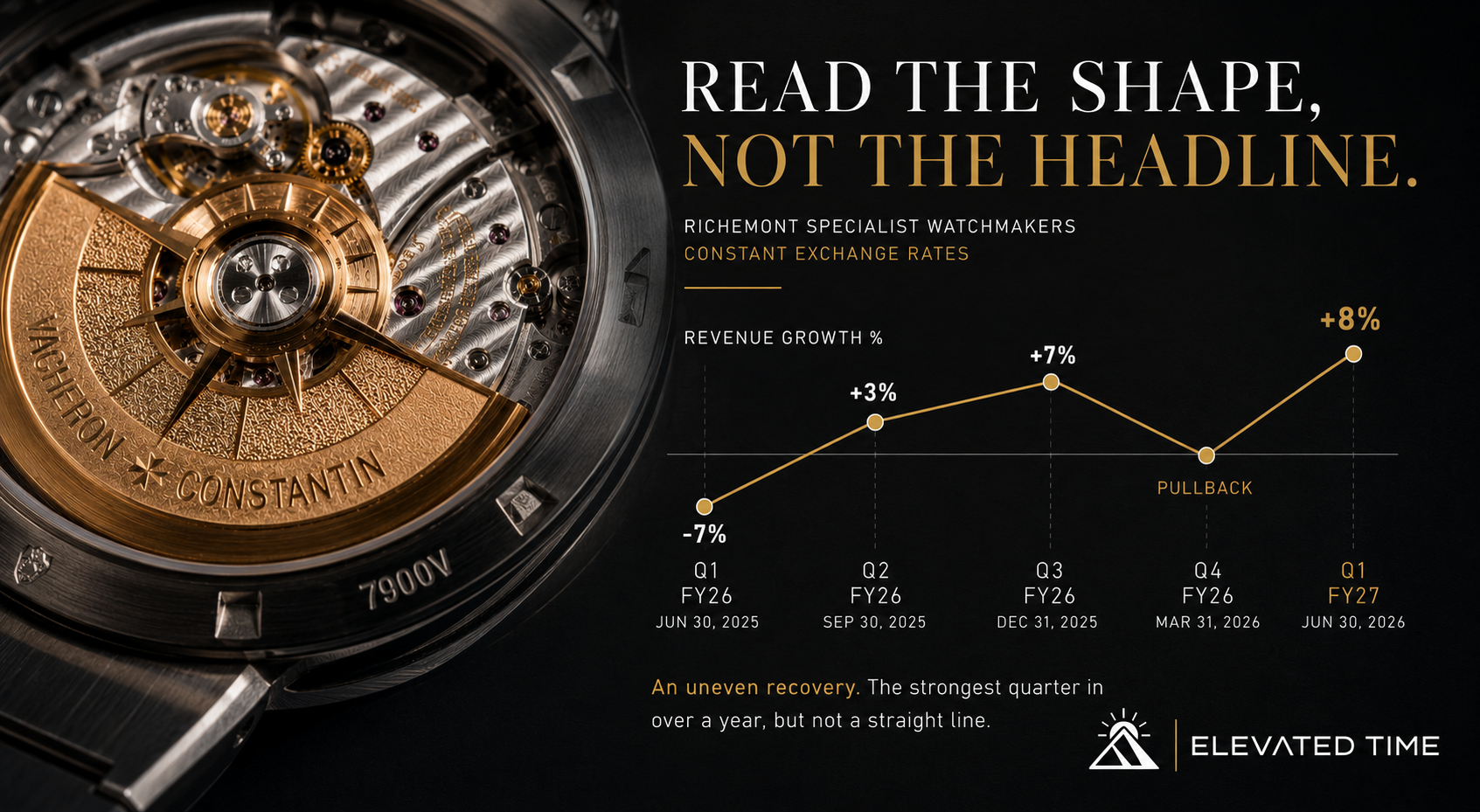
Vacheron Constantin's parent company just posted its best watch quarter in a year. The number everyone's missing is the one before it.
Richemont, the Swiss luxury group that owns Vacheron Constantin, Cartier, and Jaeger LeCoultre among others, published its first quarter results this week, giving the clearest public confirmation yet of something we have been positioning around for months. But the real story is choppier than the headline suggests, and the choppiness is worth understanding.
Specialist Watchmakers revenue rose 8% at constant exchange rates this quarter, the strongest single quarter in over a year. Vacheron Constantin was named directly by the company as one of three maisons standing out, alongside Jaeger LeCoultre and A. Lange and Söhne.
Here is the actual path to get here. The segment fell roughly 7% a year ago, then posted back to back positive quarters, up 3%, then up 7%. Full year results still came in at only 1% growth at constant rates, which means the following quarter gave some of that gain back. Now the segment has bounced again, harder than before.
That pattern matters more than a single clean headline number. This is not a steady recovery. It is a segment finding its footing in fits and starts, with real quarters of weakness mixed in, and the current quarter is the strongest bounce yet.
This is worth separating from the usual secondary market noise. We are not reading VC strength off a Grailzee auction result or a thin comp set. This is a public company's own reporting on primary demand for the brand, and it is a genuinely uneven climb rather than a straight line.
The caveat still holds. Watch sales are growing at roughly a third the rate of Richemont's jewelry business. Asia Pacific was flat, with declines in China, Hong Kong, and Macau offset by strength elsewhere.
What it confirms for collectors and sellers: the brands with genuine collector depth, limited production, and manufacture level finishing are the ones showing resilience first, even if that resilience is not a smooth line. That is consistent with what we have seen client side on Overseas and Patrimony references over the past two quarters.
Know the shape of the recovery before you treat one strong quarter as a trend line.
Pre-owned Patek Philippe, Audemars Piguet, Vacheron Constantin, Rolex and many others.
National. Appointment based.
www.elevatedtimewatchco.com | (484) 592-4800 | #ElevatedTimeWatchCo
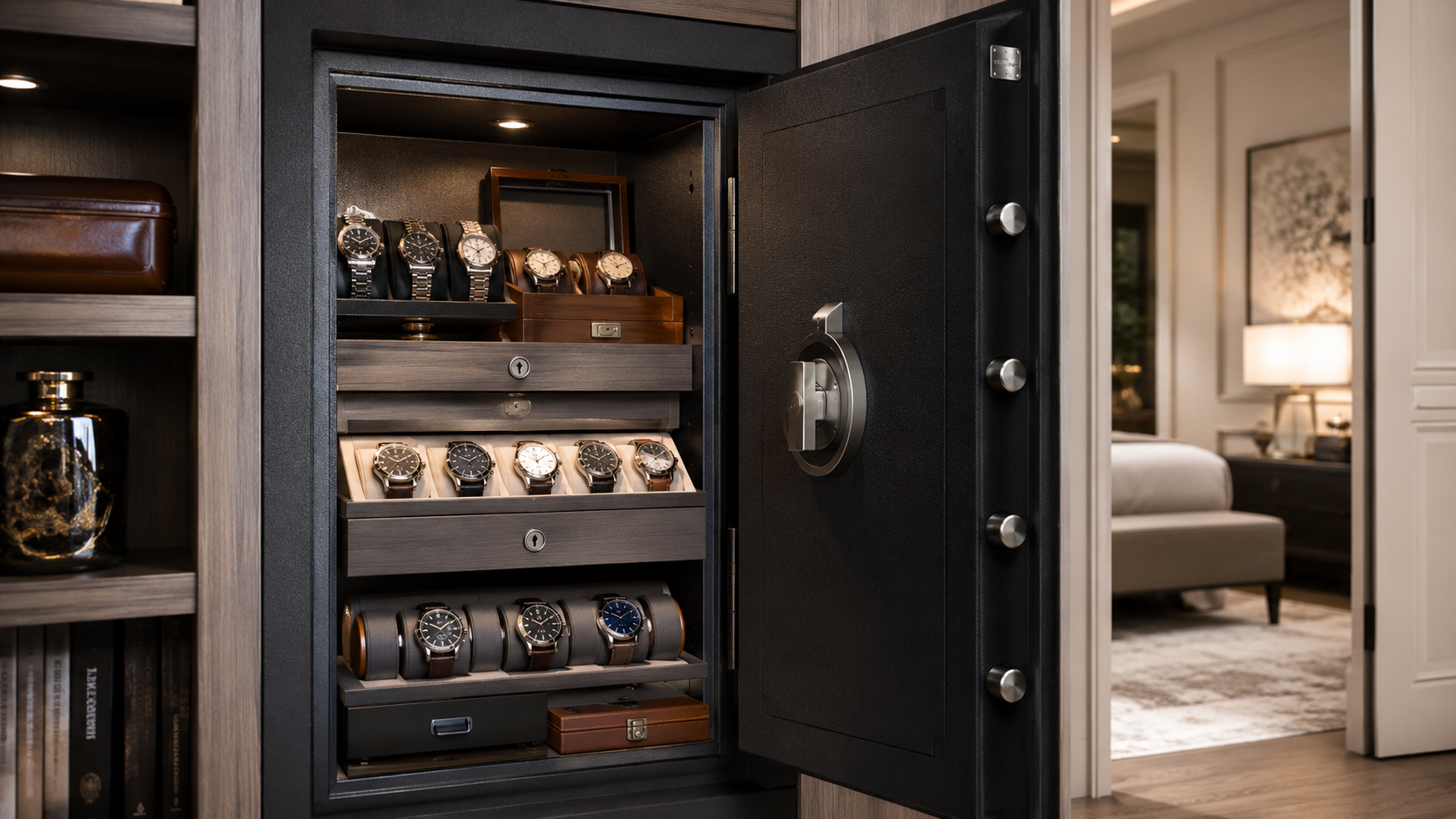
Blue-chip watches are on a target list, and the pattern behind it is worth knowing.
Roughly 10,000 luxury watches are reported stolen or lost worldwide each year, close to one every hour. Richard Mille sits at the top of recent theft data, but the same logic applies to any watch with real resale value. A thief doesn't need full retail for a stolen Patek or AP either. A steep discount still nets a payday most property crimes can't touch.
The method has a pattern now. A staged distraction in public, someone falls, needs help, creates a reason for contact, then a coordinated grab while your guard is down. It has hit public figures and private collectors alike, and it is not random.
Two places to close the gap:
What you wear. Visibility is the vulnerability, not the watch. Stay alert at dense public events, be wary of strangers who create sudden urgent situations, and keep real-time location off social media. A geotagged photo tells a coordinated group exactly where you are.
What you store. A watch box visible through a window or in a background photo is a floor plan for anyone casing a property. A bolted, rated safe is the baseline, not a drawer. And most homeowners policies cap jewelry coverage far below what a real collection is worth. If you don't know your current cap, that's worth finding out before you need it, not after.
Document everything now: serials, references, purchase records, current photos, kept somewhere other than next to the safe. It's what makes a piece traceable if the worst happens.
A five, six or seven figure watch deserves the same operational discipline as any other asset that size.
If you want a straight answer on whether your current coverage or storage actually holds up, ask. No pitch, just a direct read.
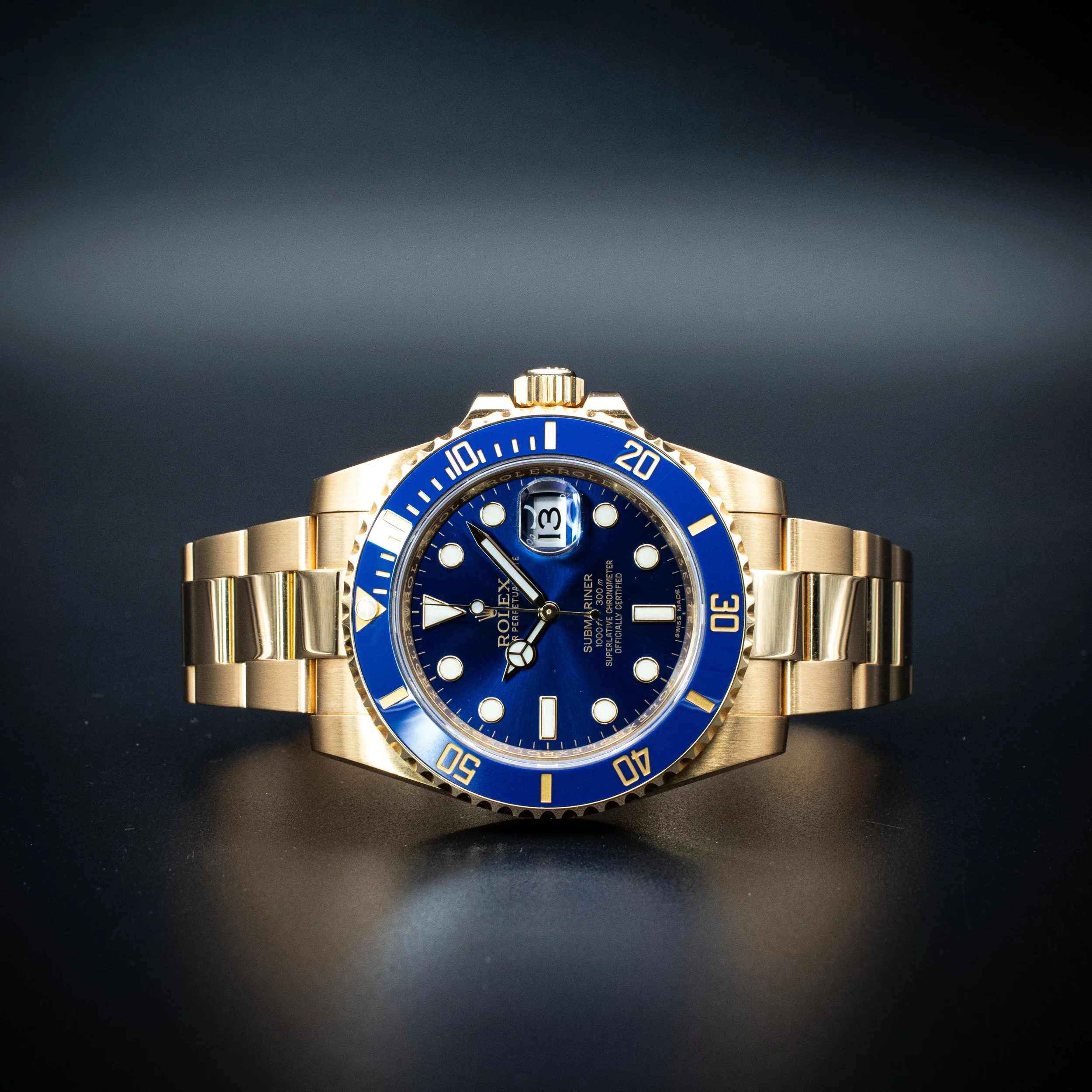
Rolex raised gold prices twice in the first six months of 2026.
Most people read the headline and moved on. The buyers who understand what comes next are the ones who act.
Here is the actual mechanics of what just happened.
On January 1, gold and precious metal Rolex references went up 6 to 9 percent. On June 1, gold models were hit again, another 5 percent. Cumulatively, that is a 13 to 15 percent retail increase on gold references in six months. The full yellow gold Submariner Date now retails at $50,900. The yellow gold Day-Date 40 is approaching $48,000.
Steel was untouched in June. That is not an accident. Rolex is protecting the democratized end of the lineup while repricing the top. The driver is gold itself, which has roughly doubled in price over the past three years.
Here is what most coverage is missing.
Secondary market prices on gold references lag retail increases by 60 to 90 days. Right now, several solid gold Rolex references are still trading at or below the new retail price on the secondary market. The yellow gold Submariner Date, for example, trades in the mid-$40,000s on the secondary market against a $50,900 retail. That gap exists today. It will not exist indefinitely.
The counterargument worth sitting with: the spread between retail and secondary on gold sports models has been compressing for two years. The days of obvious arbitrage may be narrowing. If a buyer is chasing a gold reference purely on price mechanics rather than genuine desire to own the piece, that thesis deserves scrutiny before commitment.
What this moment actually illustrates is how secondary market pricing works. Retail repricing sets a new ceiling. Dealer asks anchor upward within weeks. Pre-owned pricing follows, unevenly and on a lag. The window between repricing and full secondary absorption is where the value lives, and that window is measured in weeks.
For buyers who have been evaluating a gold or two-tone reference, the time to have that conversation is now, not after the secondary market reprices.
Pre-owned Patek Philippe, Audemars Piguet, Vacheron Constantin, and Rolex.
National. Appointment-based.
https://lnkd.in/e7DKm8WY | (484) 592-4800 | @elevatedtimewatchco
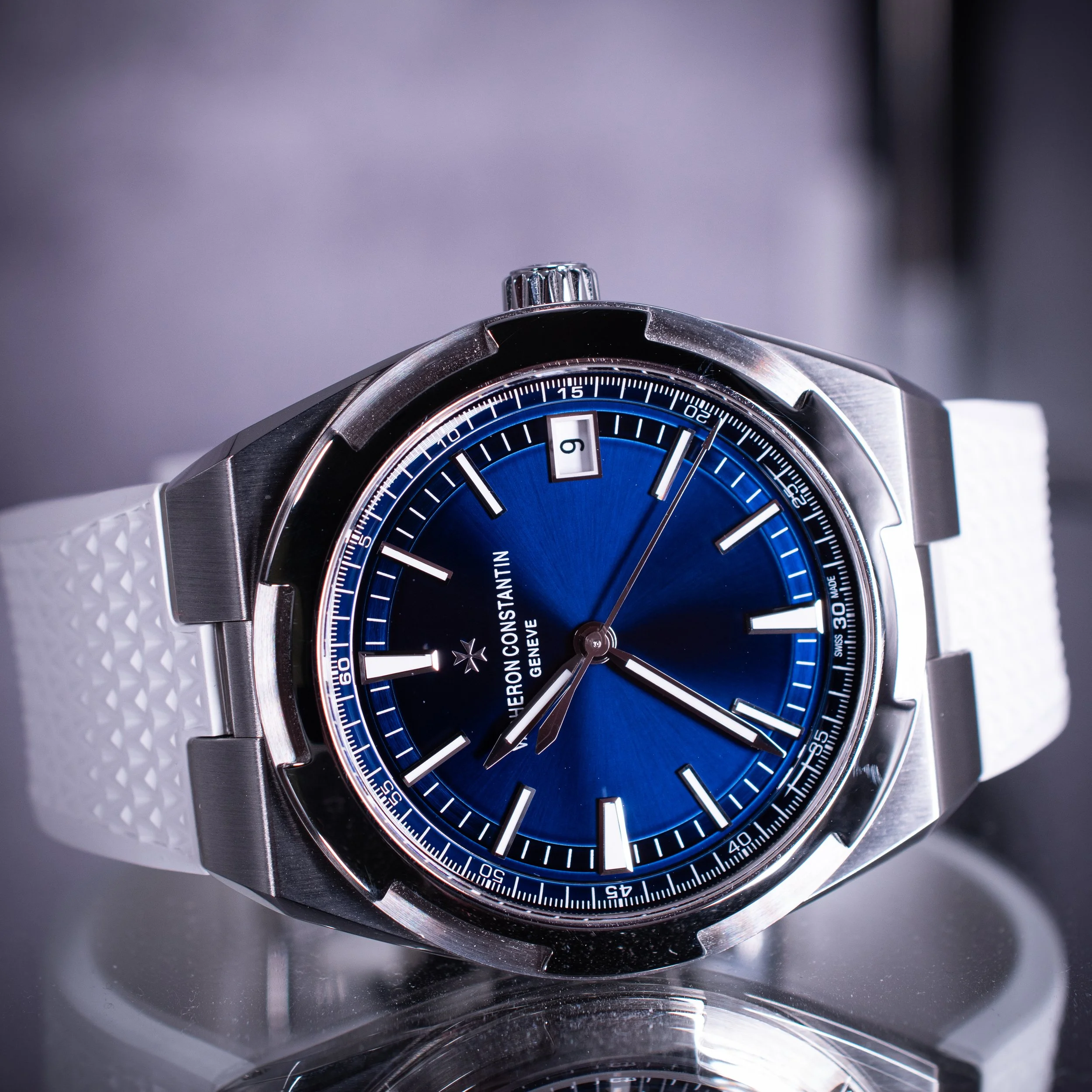
Why the production year on a Vacheron Constantin Overseas changes the price by thousands.
Why the production year on a Vacheron Constantin Overseas changes the price by thousands.
Two buyers. Same reference. Same dial. Same bracelet. One pays $4,000 more. Here is why.
The Vacheron Constantin Overseas runs on two pricing levers most buyers never see: generation and card date.
In 2016, Vacheron launched Gen 3, anchored by three core references: the 4500V, 5500V, and 7900V. In 2024, Gen 4 arrived with their counterparts: the 4520V, 5520V, and 7920V. Refined proportions, same core movements, minor spec changes. The market does not treat them the same. A Gen 4 example trades near or above retail. A Gen 3 in identical condition trades at a discount. Different suffix, different price.
Within Gen 3, card date drives the second variable. A 2023 or 2024-dated warranty certificate signals near-new provenance, stronger resale position, and full registration eligibility for extended coverage. A 2019 card signals none of that. That gap moves price by thousands on an otherwise identical piece.
Two watches can share a reference family and look identical in photos. The generation suffix and the card date tell the real story.
At Elevated Time, we source with both filters applied. Buyers who understand this do not overpay.
Pre-owned Patek Philippe, Audemars Piguet, Vacheron Constantin, and Richard Mille. National. Appointment-based.
www.elevatedtimewatchco.com | (484) 592-4800 | @elevatedtimewatchco
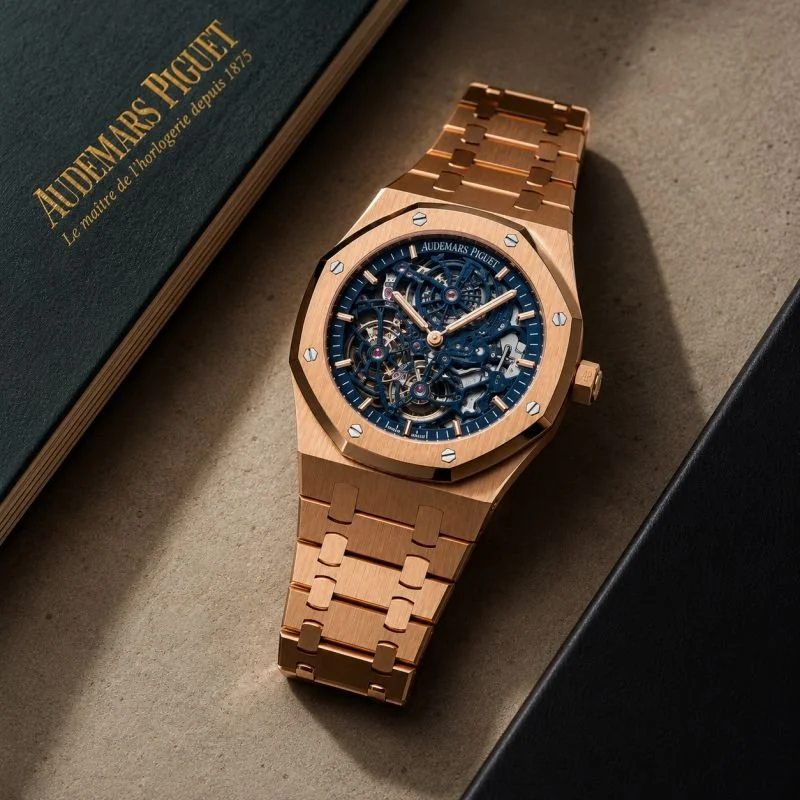
Two asset classes are telling the same story in 2026, and serious collectors are starting to connect the dots.
Two asset classes are telling the same story in 2026, and serious collectors are starting to connect the dots.
Collector cars and blue-chip timepieces are both experiencing what happens when constrained supply meets rising input costs and institutional demand. Ferrari Enzos are setting new auction records. Porsche Carrera GTs are crossing $1.5 million. The appreciation thesis is real and it is documented.
Watches are running the same playbook.
Rolex and Audemars Piguet raised U.S. retail prices 7 percent in January. Patek Philippe cut domestic prices 8 percent as a tariff response, then raised international prices 4 percent simultaneously. Even after the U.S. cut, Patek sits roughly 14 percent above its year-end 2024 pricing. Gold peaked above $5,600 per troy ounce in January and is still trading near $4,500 today.
Manufacturers are not absorbing that. They are passing it through, and the secondary market adjusts accordingly.
The parallel to collector cars is structural. Both asset classes reward buyers who understand production scarcity, condition premiums, and provenance. Both punish transactional buyers who chase the last auction spike rather than acquiring on fundamentals.
Where the two diverge is in friction. A collector car requires climate-controlled storage, specialized insurance, mileage restrictions, and maintenance budgets that compound annually. A blue-chip timepiece from a verified source carries none of that overhead. It is portable, globally liquid, and clears in a wire transfer.
Two asset classes. Same underlying thesis. Very different carrying costs.
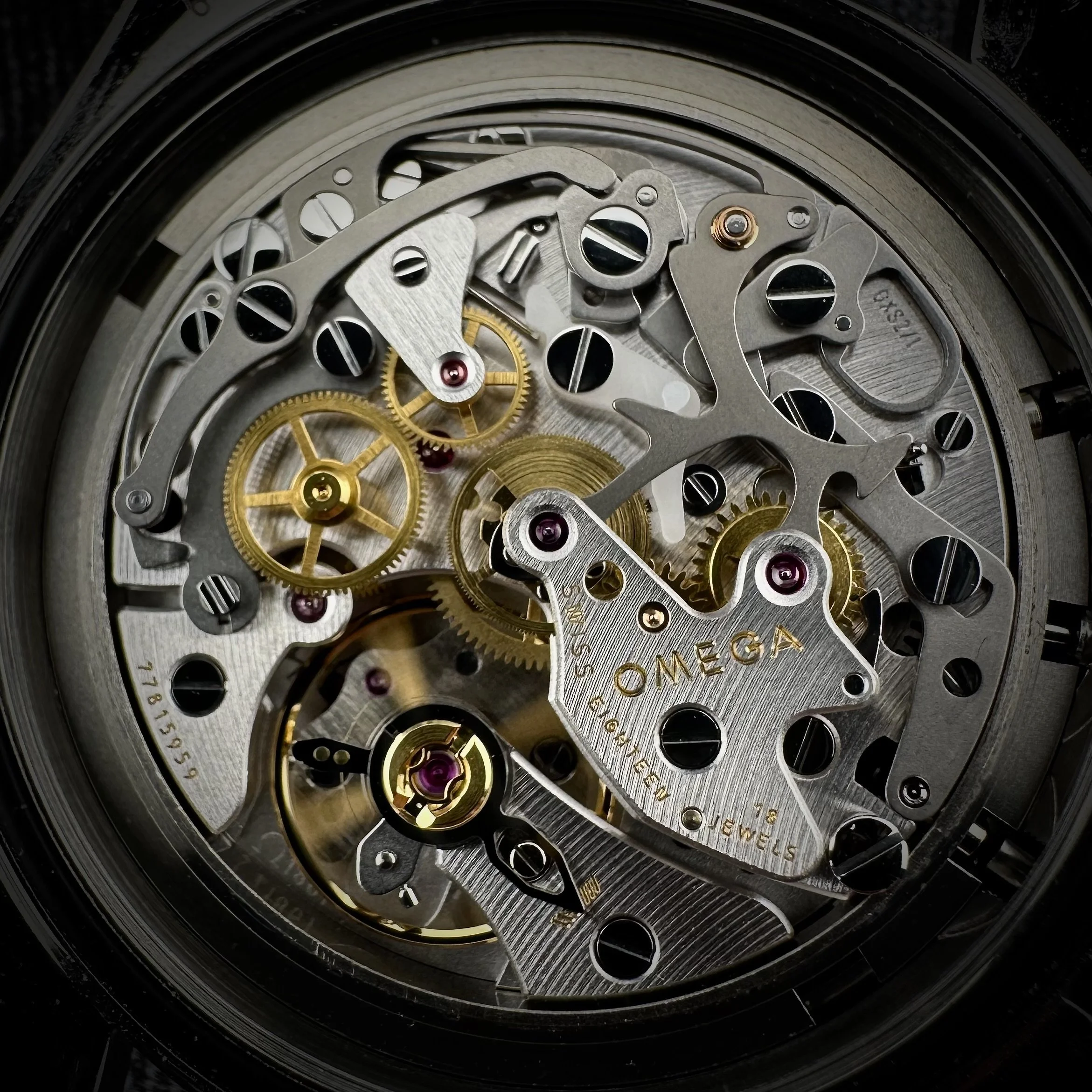
Most buyers treat service history as a checkbox. That’s a pricing mistake.
Most buyers treat service history as a checkbox. That’s a pricing mistake.
When a mechanical watch goes in for a full service, here's what actually happens:
The movement is completely disassembled, often 200+ individual components. Every part is cleaned in an ultrasonic bath to strip oils, debris, and oxidation. A trained watchmaker inspects each component under magnification, checking for wear on jewels, pivots, and the escapement. Parts that don't meet tolerance are replaced.
Then the movement is reassembled with fresh lubricants applied in precise quantities to specific contact points. Too much is as damaging as too little. The watch is placed on a timegrapher across six positions to regulate timing deviation. On a high-grade movement, the target is under five seconds per day.
The case is refinished, either polished on brushed surfaces or bead-blasted on matte ones. On anything with a water resistance rating, the gaskets are replaced and the case is pressure tested before it leaves the bench.
A full service on a complicated movement at an authorized service center typically runs $1,200 to $4,000 depending on brand and complexity. That matters on a $25,000 watch.
What buyers should ask for: the service invoice, not just the verbal assurance. Who performed it, when, and what was replaced. Brand-authorized versus independent matters. A watch serviced two years ago with documentation is worth more than one serviced three months ago without it.
Service history is a pricing variable. Treat it like one.
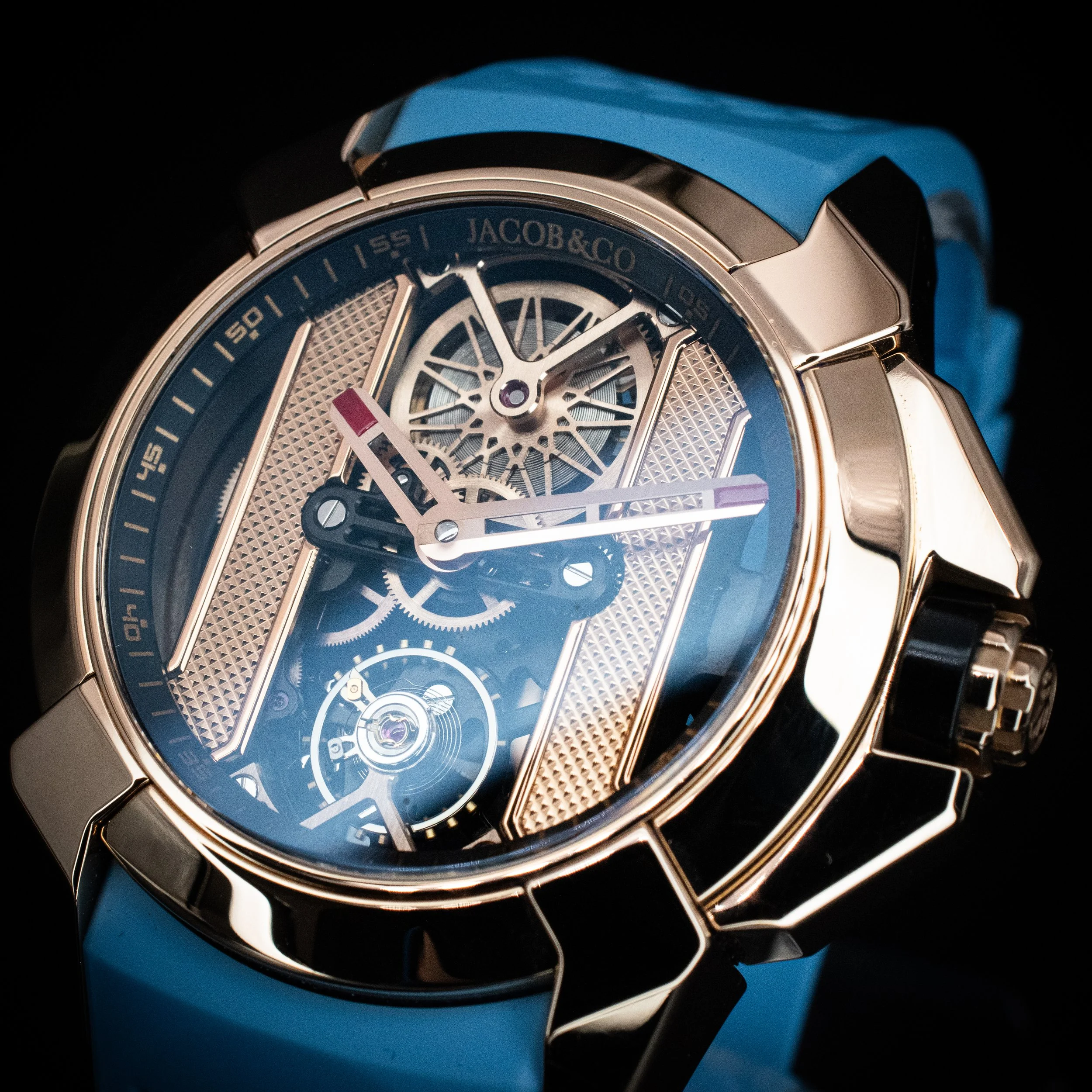
Most buyers don't know what they're actually paying for when they pay a premium for a movement.
Most buyers don't know what they're actually paying for when they pay a premium for a movement.
The escapement is the heart of a mechanical watch. It's the component that controls the release of energy from the mainspring -- the click you hear, the vibration you feel on the wrist. Without it, you don't have a watch, you have a coiled spring.
There are three designs worth understanding if you're buying at the $10,000+ level.
*The lever escapement has been the industry standard for over 150 years. It's robust, serviceable, and nearly universal. The tradeoff: it requires lubrication at the pallet fork and escape wheel, which means mandatory service intervals, typically 5 to 7 years depending on manufacturer standards.
*The co-axial escapement, developed by George Daniels and adopted by Omega in 1999, fundamentally changed that calculus. By reducing sliding friction at the escapement interface, it dramatically extends service intervals -- Omega now quotes 8 to 10 years under normal conditions. That's not just a mechanical footnote. For a buyer, it's a real reduction in total cost of ownership over a 20-year hold.
*The detent escapement is the precision outlier. Used primarily in marine chronometers and select complications, it offers superior accuracy but almost no shock resistance -- which is why you rarely see it in a wristwatch. When you do, you're looking at haute horlogerie territory where accuracy is the design objective, not durability.
Why does this matter at the acquisition level?
Because service interval directly affects total cost of ownership. A watch with a lever escapement and a $1,200 manufacturer service every 5 years is a different financial object than a co-axial movement with a $800 service every 10 years -- even if the purchase prices are identical.
Brands that invest in escapement innovation are signaling something about where they stand on the long game. Omega's co-axial bet in 1999 was controversial. Two decades later, it's a core differentiator in the brand's technical narrative and a legitimate resale talking point.
Mechanical literacy isn't optional at this level. It's the difference between a buyer who owns a watch and a buyer who owns a position.
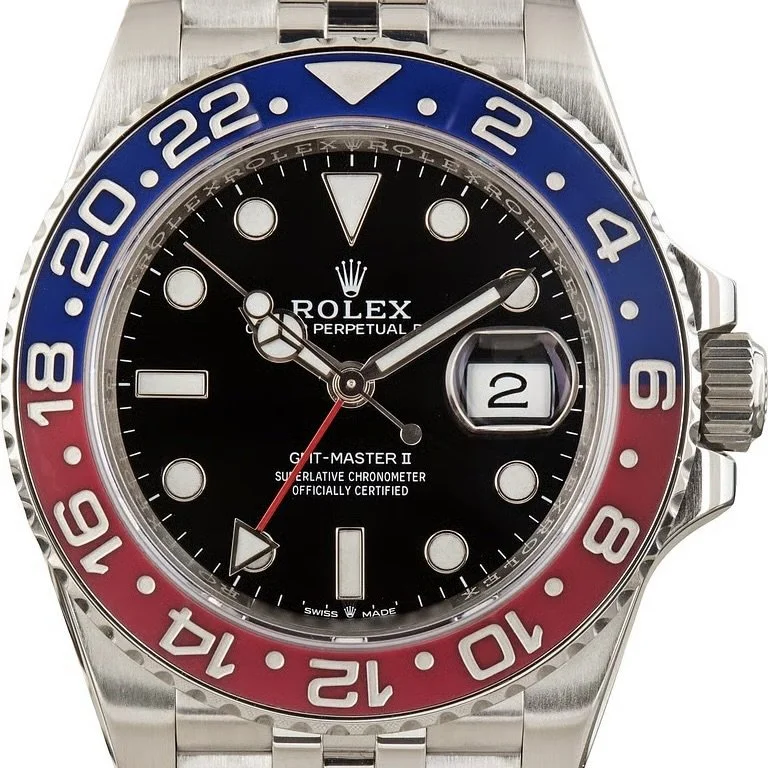
The Rolex Pepsi is gone. The market saw it coming first.
The Rolex Pepsi is gone. The market saw it coming first.
On April 13, 2026, the GMT-Master II ref. 126710BLRO quietly disappeared from Rolex's website. No press release. No replacement. Both the steel and white gold versions were pulled simultaneously.
The market had already moved.
Before Geneva, the signals were everywhere.
As early as February, authorized dealers stopped receiving deliveries and began notifying waitlist customers to consider alternatives. The reference started vanishing from dealer sites without explanation.
The secondary market responded immediately. From January through late March, pre-owned Pepsi prices climbed roughly $3,000 on speculation alone. Purchase requests on major resale platforms surged more than 500 percent versus the same period in 2025. Active listings contracted by approximately 25 percent as sellers pulled inventory in anticipation. By the time Geneva confirmed the discontinuation, the price move had largely already happened.
Why it happened.
The two-color Cerachrom bezel was always a managed problem, not a solved one. Stabilizing a uniform red in zirconia ceramic has no reliable mineral solution -- Rolex's own materials documentation acknowledges this. The failure rates on the red and blue bezel are disproportionately high. Removing it frees more production capacity than almost any other catalog cut Rolex could make.
The Coke never came. Every expectation pointed to a red and black replacement. Geneva opened without one. For the first time in the Cerachrom era, the steel catalog has no red bezel.
The precedent.
When Rolex pulled the Submariner Hulk in 2020 under similar conditions -- sustained premiums, a watch that had become more interesting as a financial object than something to wear -- values roughly doubled over the following two years.
Post-confirmation, steel Pepsi examples have surged past $30,000. Unworn examples are trading above $40,000. Retail was approximately $11,800.
The counterargument deserves airtime: Rolex produced this reference at scale for eight years. Supply is fixed but not scarce in absolute terms. If a red bezel successor arrives within two years, the premium deflates.
What this story actually illustrates is how secondary market pricing works. The dealers reading authorized dealer inventory signals in January had weeks of price advantage over those who waited for the announcement. The gap between market signal and public confirmation is where the real edge lives.s.
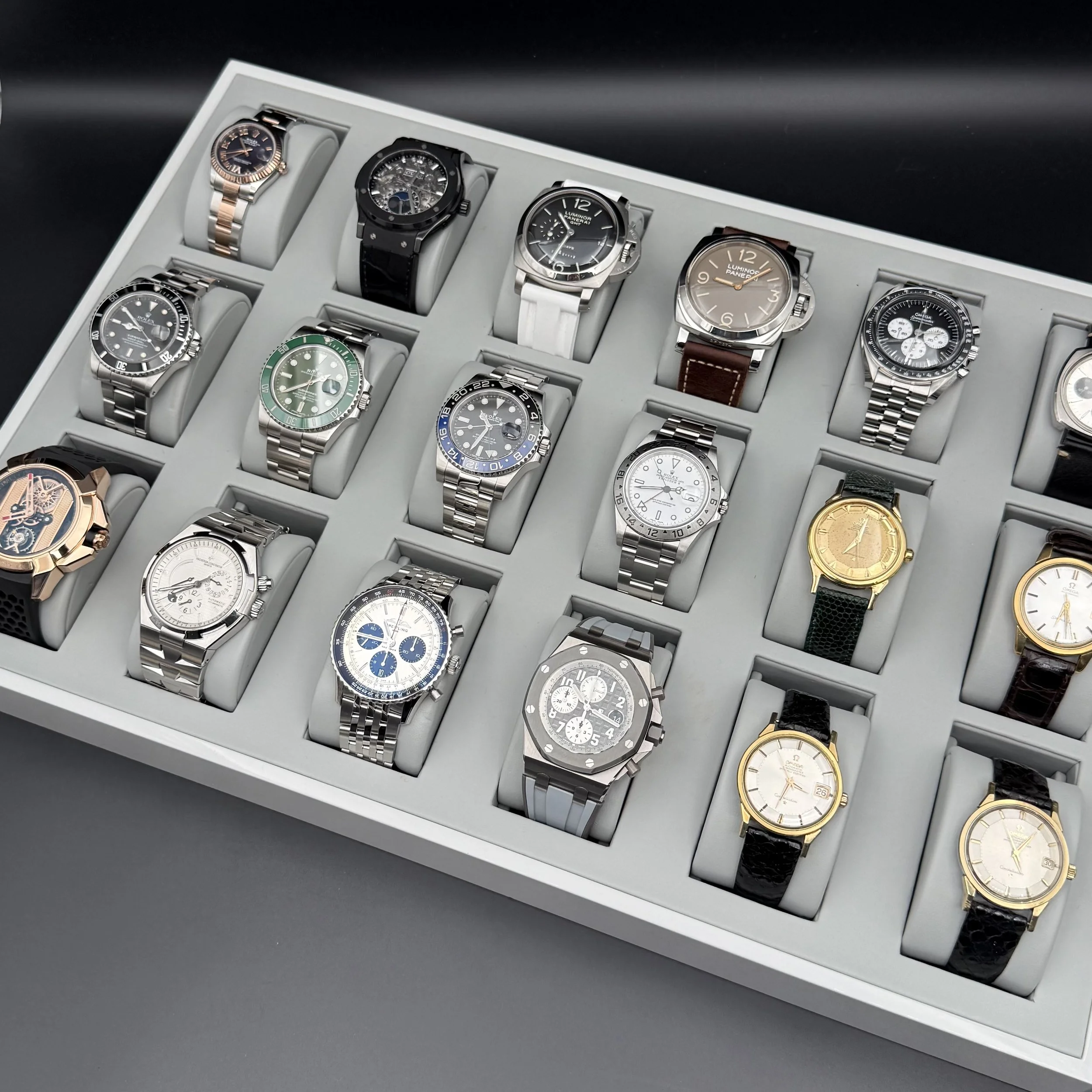
Why most people build watch collections wrong
Why most people build watch collections wrong
Most people enter the watch market chasing what looks impressive. They end up with pieces that bleed value from day one.
The collectors who come out ahead start with one question: Can I sell this in 30 days without taking a big hit? If you can't answer that before you buy, you're not collecting. You're donating.
Where to start:
Rolex, Omega, and Tudor are the three safest entry points for new collectors. Deep buyer pools, transparent pricing, and proven secondary market demand. For collectors entering under $5,000, Longines deserves serious consideration and is consistently underrated.
What the data doesn't tell you:
Price aggregators will show you what a reference sold for. They won't tell you that production year, contents, and country of origin can move that number by thousands of dollars within the exact same model. That's the context that protects your position.
The move:
Buy documented. Box, papers, and hang tags are not accessories. They are value drivers. And before you commit to anything, talk to someone who actually reads the market.
If you are serious about entering intelligently, I work directly with collectors from first acquisition through long-term strategy. No pitch. Just an honest read on what the data actually says.
F.P. Journe: The hottest brand in watches right now - but is it actually investable?
F.P. Journe: The Hottest Brand in Watches Right Now -- But Is It Actually Investable?
The numbers are impossible to ignore.
At the Phillips New York Watch Auction XIII in December 2025, eight of the top ten lots were F.P. Journe timepieces, with the auction totaling $43.5 million - the highest-grossing watch auction in U.S. history. The Francis Ford Coppola FFC Prototype sold for $10.75 million, setting a world auction record for any independent watchmaker.
Momentum like that generates headlines. It also generates buyers who should not be buying.
Here is what the data actually tells us:
F.P. Journe produces roughly 900 to 1,000 pieces per year. That scarcity is real. The craftsmanship is real. The auction results, however, require a different kind of analysis.
When a brand's price appreciation is driven primarily by a small number of auction events -- not broad secondary market depth, not consistent sell-through across multiple platforms, that is a signal, not a green light. The volume is thin enough that a single motivated seller or a single provenance-driven lot can move the entire price index. That cuts both ways.
F.P. Journe's own management has said publicly that current auction prices are "way too high" and that the brand is not happy about it because astronomical secondary prices attract buyers focused on price, not on the underlying horological value.
That is a rare and honest signal from a manufacturer, and it deserves more attention than it has received.
Our position at Elevated Time:
F.P. Journe is one of the most important independent watchmakers alive. The craft is not in question. What is in question is whether the current price index reflects genuine market depth or a concentrated auction cycle that has run ahead of itself.
For established collectors with long time horizons and a network to move non-liquid pieces, this is a brand worth understanding deeply. For newer buyers chasing the headline number, this is not the entry point. The downside on a liquidity-thin brand that corrects can be swift and severe.
Know what you are buying. Know your exit before you enter. And never confuse auction performance with secondary market stability.
That is the discipline that protects capital.
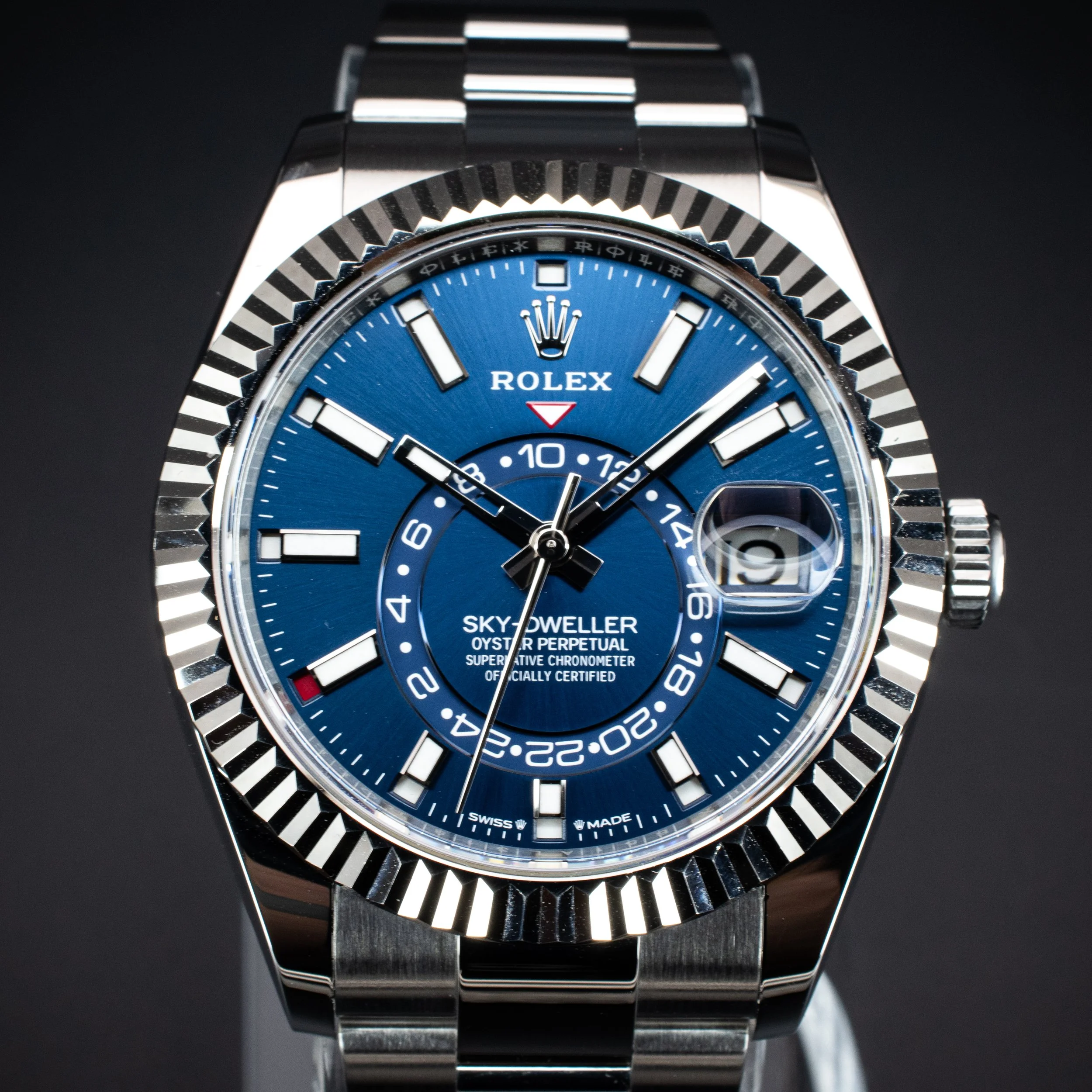
Dial color is not just aesthetics.
Dial color is not just aesthetics.
In 2025 and into 2026, it is one of the sharpest liquidity signals in the secondary market.
Blue remains the most transacted color across Patek Philippe and Audemars Piguet sport references. It is not the most exclusive, but it is consistently the fastest to move when you need to exit.
Black dials, particularly on Royal Oak references, have compressed slightly at volume but hold their floor with experienced collectors. They are a slower flip but a cleaner hold.
Green had its moment. Certain references still carry a premium, but the broad green wave has peaked. Reference and generation matter significantly now -- not all green dials are equal.
Salmon and champagne are the ones to watch. Low transaction volume today, growing collector interest, and a buyer profile that skews toward long-term holders rather than flippers.
Know what color you are buying and why. The dial is part of the thesis.
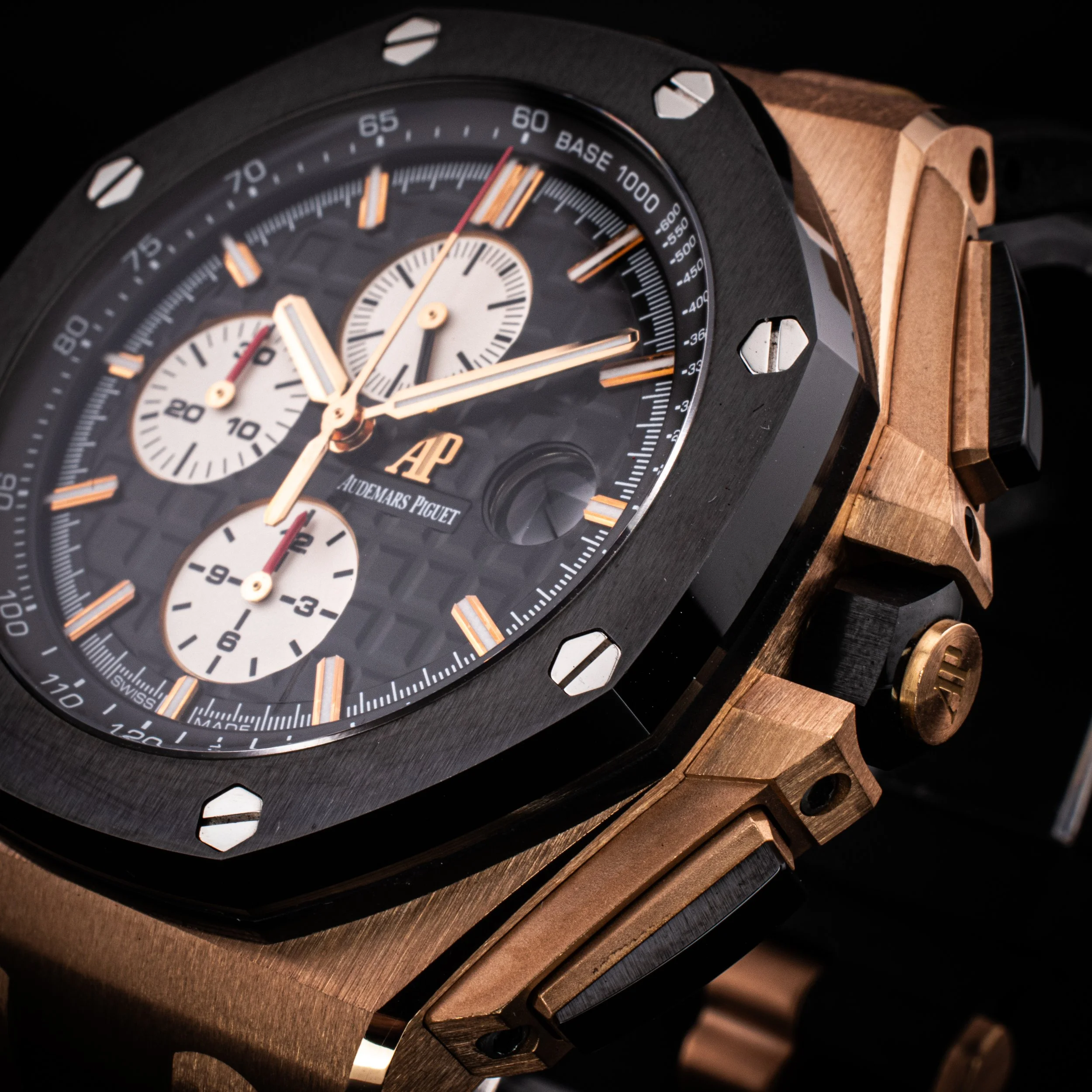
The correction in Audemars Piguet Royal Oak models has created a window. That window is not permanent.
The correction in Audemars Piguet Royal Oak models has created a window. That window is not permanent.
Over the last six months, Royal Oak references have softened across the board as the post-pandemic premium continued to unwind. For buyers who have been waiting for the right entry point, the current environment is as favorable as it has been in two years.
What the data is showing:
Blue and black dial Royal Oaks in both steel and rose gold are trading at levels that will look compelling in retrospect once manufacturer price increases flow through the secondary market. AP has adjusted its pricing already in 2026, consistent with moves made by Rolex and Patek. When that happens, the secondary market reprices and the correction window closes.
The Royal Oak Offshore rose references and the newer clasp Royal Oak blue dial are the specific segments worth attention in the current environment. These are not distressed pieces as they are well-positioned references at a moment when institutional buying interest has temporarily softened.
That interest returns. The question is whether you are positioned before or after it does.
The luxury watch market doesn’t move in isolation. It never has.
The luxury watch market doesn't move in isolation. It never has.
Right now, three macro forces are converging that any serious collector or watch investor needs to understand:
1. Precious metal costs are rising. Gold trading above $5,000/oz — more than double where it stood just 18 months ago — directly impacts the manufacturing cost of Patek, AP, and Rolex precious metal references. When input costs rise, manufacturers raise prices — and the secondary market for pre-owned pieces adjusts accordingly.
2. Dollar devaluation is strengthening the store-of-value argument for hard assets. Watches — particularly high-complication pieces from the top Swiss manufactures — are increasingly viewed alongside real estate and classic cars as a legitimate place to park capital.
3. Import and tariff exposure is increasing the landed cost of new Swiss watches. That makes well-maintained pre-owned examples more attractive on a relative value basis than they have been in years.
These aren't abstract forces. They're shaping pricing decisions at the manufacturer level right now, and those decisions flow directly into the secondary market within 60 to 90 days.
Collectors who track these signals buy well. Those who don't tend to buy at the wrong time and wonder why.
Follow Elevated Time for weekly perspective on what's actually moving the market.
Rolex raised prices in 2026 on precious metal references by up to 15%
Rolex raised prices in 2026 on precious metal references by up to 15%.
Most people saw the headline and moved on.
The buyers paying attention understood what it actually means.
When Rolex moves the catalog, the secondary market doesn't follow immediately — it follows on a 60 to 90 day lag. That window is the trade.
Here's how it works:
Dealers with existing inventory reprice to the new ceiling. Buyers who purchased below the increase sit on embedded appreciation. Supply tightens as pieces get held back anticipating the reindex.
The references that move first are always the precious metal sports models — rose gold, platinum, two-tone. They have the thinnest supply and the highest sensitivity to metal cost inputs.
The references that lag are high-volume steel pieces. They move eventually, but the spread compresses faster because liquidity is higher.
If you're holding precious metal Rolex right now, you are in a better position than you were 30 days ago. If you're looking to buy, the window before the secondary market fully reprices is measured in weeks.
This is exactly the type of market signal we track daily at Elevated Time. DM us to understand where your current position or target acquisition stands.
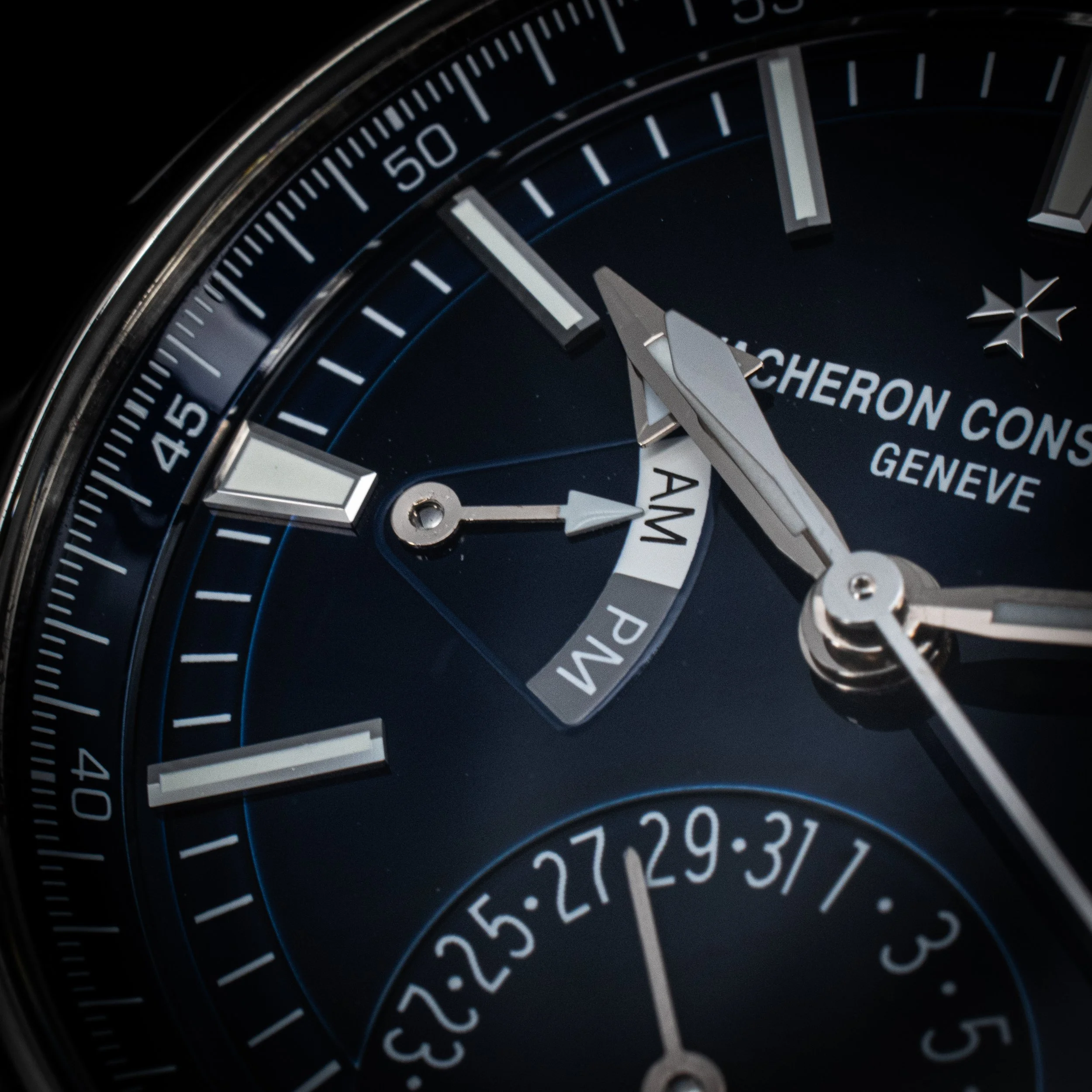
Not all complications are created equal.
Not all complications are created equal.
The market prices them very differently than most buyers expect.
A perpetual calendar on a Patek Philippe is not the same as a perpetual calendar on a lesser manufacture — even if the function is identical on paper. What you're actually paying for is the movement architecture, the finishing standard, and the brand's decades-long track record of supporting that complication in service.
The complications that hold value most consistently over time share three traits: they are difficult to produce, expensive to service correctly, and made by manufacturers with the infrastructure to support them long term.
Chronographs are the most common entry point for collectors. Grand complications — perpetual calendars, minute repeaters, tourbillons — represent the ceiling. Between those two poles is where most of the interesting value conversations happen.
Travel time complications have quietly become one of the stronger performers in the current market. Functional for modern life, mechanically interesting, and produced in limited quantities by the top tier of Swiss manufacture.
If you're evaluating a complicated watch and want an honest assessment of what the complication is actually worth in today's market — not what the seller says it's worth — that's the conversation we have every day.
Follow Elevated Time for more on the mechanics of watch value.

12 Iconic Panerai Watches That Defined Luxury Timekeeping
When it comes to luxury timepieces, Panerai stands out with its blend of Italian design and Swiss craftsmanship. From the depths of the ocean to luxury boutiques, Panerai watches have made their mark in the world of horology. Let’s explore twelve iconic models that not only showcase exquisite craftsmanship but have also contributed to the brand's rich legacy.

1. The Origins of Panerai
Founded in 1860, Panerai started as a watchmaker in Florence, Italy, specializing in high-precision instruments. Initially, the brand catered to the needs of the Italian Navy, creating timepieces that could withstand the pressures of deep-sea exploration. This fascinating beginning laid the groundwork for a legacy that emphasizes durability and craftsmanship.
The unique requirement for legibility and resilience in maritime environments led to innovative designs that would ultimately define the Panerai collection. The blend of practicality and Italian elegance marked Panerai as a pioneer in the luxury watch industry — a reputation that has remarkably persisted through the ages.
2. The Legendary Radiomir
The Radiomir, launched during the 1930s, is one of the cornerstone models of Panerai's legacy. Named after the luminescent material that allowed visibility in the dark, the Radiomir features a minimalist design that speaks volumes about efficiency. With its cushion-shaped case and unguarded crown, this watch exudes a raw and rugged appeal that was essential for the Italian Navy.
Notably, the early Radiomir watches were primarily used by commandos for underwater missions and emergency situations. Its striking simplicity, combined with cutting-edge technology, makes this a timeless piece that continues to resonate with both collectors and enthusiasts alike. The Radiomir represents a union of practicality and allure, solidifying its place in the pantheon of iconic timepieces.
3. The Timeless Luminor
Following the success of the Radiomir, the Luminor was introduced in the 1950s, showcasing Panerai's commitment to innovation. With a crown-protecting bridge and a distinctive cushion-shaped case, the Luminor has become an emblem of toughness. The glow of its luminescent markers has made it a favorite among divers and professionals alike, solidifying its status in the luxury market.
Many collectors appreciate the Luminor not just for its ruggedness but also for its rich design heritage. The robust nature of this watch, combined with its striking designs and colors, offers something unique for every enthusiast. From military applications to sophisticated urban settings, the Luminor proves itself as an adaptable and reliable timepiece.
Furthermore, the Luminor has appeared in various editions and collaborations over the years, making it a versatile choice for collectors looking to broaden their Panerai collection. Each model tells a different story while maintaining the core attributes that make a Panerai watch so distinctive.
4. The Evolution of the Mare Nostrum
Originally developed in the 1940s for the Italian Navy, the Mare Nostrum was meant to function as a chronograph for naval officers. This exquisite model showcases two pushers on the case for timing, a feature that was groundbreaking at that time. While the Mare Nostrum was not put into mass production initially, it has since become a highly sought-after collector's item.
The aesthetics of the Mare Nostrum are a blend of historical significance and modern design. It's a watch that seamlessly integrates function and style, proving that Panerai does not shy away from innovation while still respecting its roots. The Mare Nostrum's unique story and design make it a pivotal piece for both history buffs and serious collectors.
5. The Captivating 1950’s Case Design
The 1950s saw a significant evolution in Panerai's approach to watchmaking, particularly with its case designs. This era was characterized by larger cases and more robust materials, reflecting the needs of divers and military personnel who relied on their timepieces for extreme conditions. The innovative materials used are not just for aesthetics; they enhance the durability and waterproof qualities essential for underwater adventures.
This shift ultimately resulted in long-lasting models that capture the essence of luxury and reliability. The 1950s designs embraced bolder shapes and efficient layouts, emphasizing readability—a design philosophy that remains core to the Panerai collection today. Oftentimes, the watches from this era become the go-to choice for enthusiasts who appreciate both vintage charm and contemporary durability.
6. The Unique Submersible
Introduced in the 1990s, the Submersible collection brought a fresh take to Panerai's legacy of underwater watches. With a focus on recreational divers, the Submersible incorporates features like a rotating bezel, which is essential for note-taking time underwater or managing oxygen supplies during dives. Its bold character and distinct aesthetics resonate with modern watch enthusiasts seeking adventure.
Moreover, the Submersible models navigate seamlessly between functionality and style. The addition of bright colors and assertive designs caters to a younger audience eager to make a statement yet wanting reliability. Therefore, this collection has become a staple not only for professional divers but also for collectors who appreciate the spirit of adventure embodied in the design.
7. The Innovative PAM Series
The PAM series represents Panerai's commitment to creativity and tailoring watches for specialized needs. Each PAM model offers a unique feature, be it a special material, a unique movement, or innovative complications. This collection showcases Panerai's artistic edge by blending traditional craftsmanship with modern technology, resulting in watches that push the boundaries of luxury timekeeping.
Collectors find the PAM series especially intriguing due to the limited editions and special releases, which often garner tremendous interest and value. As each PAM model evolves, it draws from the heritage of Panerai while adding contemporary excitement to the watchmaking landscape. Whether you're a serious buyer looking to invest or a newcomer to the hobby, the PAM series offers something for every discerning taste.
8. The Rich History of the Panerai Chronograph
Delving into the Panerai chronographs presents a glimpse into the brand's innovative spirit. The design and execution of chronographs show a commitment to precision and functionality, merging the elegance of classic design with the mechanics of timekeeping. These timepieces often feature additional dials and complications, elevating their appeal.
Historically, chronographs were essential tools for naval officers, allowing them to measure time accurately during crucial maneuvers. Over time, Panerai has ingeniously adapted the design to cater to modern tastes while retaining its historical significance. Collectors today admire these pieces not just for their function but also for their unique stories steeped in maritime history.
9. The Distinctive Ferro Series
The Ferro series is noteworthy for its distinct materials and rugged designs. This collection exemplifies Panerai's exploration into using experimental and unusual materials, which not only enhances aesthetics but also improves durability. The Ferro series is designed to survive extreme conditions, much like the individuals who wear them, making it particularly appealing to outdoor enthusiasts.
The unique aesthetic of the Ferro series, coupled with their technical specifications, solidifies their place in the adventurous spirit of Panerai. These watches are more than just timekeepers; they're a statement piece that resonates with those who value resilience in their luxury timepieces.
10. The Panerai Special Editions
Panerai frequently launches special edition timepieces that captivate collectors and enthusiasts alike. These limited runs often pay homage to historical designs or feature unique elements that distinguish them from the standard production models. The allure of limited availability adds an element of excitement, making these editions highly desirable.
Owning a special edition Panerai watch not only reflects personal style but also a connection to the brand's storied past. Collectors delight in hunting down these unique pieces, which often appreciate in value over time. It showcases the duality of luxury and investment, ensuring that Pantorai maintains its reputation in the competitive luxury watch market.
11. The Influence of Panerai in Modern Watchmaking
Panerai has made significant strides in modern watchmaking, influencing current trends while also setting benchmarks for quality and style. Its pioneering use of materials, innovative functionalities, and bold designs have inspired other luxury brands to embrace a similar philosophy. The marriage of practical luxury highlighted by Panerai serves as a guide for the industry.
The brand's consistent evolution reflects a deep understanding of consumer desires, showcasing how Panerai can remain relevant and appealing. By blending traditional craftsmanship with contemporary innovation, Panerai watches continue to hold their own in a rapidly changing market, appealing both to seasoned collectors and new fans alike.
12. Why Collecting Panerai is a Great Investment
For watch collectors, investing in Panerai is often considered a lucrative opportunity. The brand's reputation for quality and craftsmanship means that many of its models hold or appreciate in value over time. Limited edition releases and unique models can even become coveted assets that collectors are eager to obtain.
Moreover, Panerai's rich history and innovative designs provide a strong appeal that keeps enthusiasts coming back for more. As the brand continues to innovate while respecting its heritage, the potential for value appreciation remains high. Whether for passion or investment, collecting Panerai watches represents a commitment to exceptional craftsmanship and timeless elegance.

Why Trade Luxury Watches Instead of Selling Outright?
Trading luxury watches is often a more beneficial option than selling them outright. This approach not only helps you retain value but also opens up opportunities for acquiring new timepieces that may better suit your style or needs. In this FAQ, we explore the key reasons behind trading luxury watches, making it easier to understand why this option is becoming increasingly popular among watch enthusiasts.

Understanding the Value of Trade-ins
Trading luxury watches can significantly help retain their value. When you sell outright, you often face depreciation, especially if the watch is no longer in pristine condition. A trade-in, on the other hand, allows you to leverage the current value of your timepiece toward another purchase, maximizing the investment you initially made.
In addition to retaining value, trade-ins provide a seamless transition between watches. By trading instead of selling, you can effectively choose your next luxury timepiece without the hassles of finding a buyer or negotiating prices. This streamlined process makes trading a preferred choice for many watch owners.
Moreover, understanding the market dynamics around luxury watches can also impact your decision. Certain brands and models maintain their desirability, meaning a trade-in can yield substantial value. Knowing what’s hot in the market allows you to aim for a watch that not only appeals to your taste but also holds its worth over time.
The Benefits of Retaining Value
One of the main advantages of trading luxury watches is maintaining their inherent value. Oftentimes, the luxury watch market operates under supply and demand principles, with certain models gaining in worth. By trading, you maintain the opportunity to reinvest that value into other timepieces, therefore enhancing your collection.
When you choose to sell outright, it’s common to lose a fair portion of value due to depreciation. Luxury watches can experience quick value changes based on market trends. In contrast, with trading you can often avoid these pitfalls, giving you a significant advantage in value retention.
Furthermore, trading allows you to adopt a more strategic approach to your collection. Instead of viewing your watches as merely items of luxury, you can regard them as assets that can be utilized effectively. This mindset encourages better decision-making and a more keen interest in developing a collection that not only brings joy but also appreciates over time.
Convenience of Trading vs. Selling
Convenience is another compelling reason to trade luxury watches. The process of selling can be labor-intensive, requiring you to photograph your watch, write detailed descriptions, and interact with potential buyers. This can take time and energy that could be spent enjoying your collection instead.
Conversely, trading simplifies this process. You can visit a trusted dealer or trade-in service that understands the watch market, facilitating a quick and straightforward transaction. This makes it incredibly appealing for individuals looking to avoid the time-consuming efforts of selling outright.
Moreover, many trading options offer instant appraisals and immediate exchanges. This not only saves time but also allows you to walk away with your new watch right away! This level of convenience is simply unmatched when it comes to selling watches outright.
Expanding Your Collection with Trades
Trading luxury watches offers an excellent opportunity to expand your collection without the financial strain of purchasing new pieces outright. Many enthusiasts find that they can continually upgrade or diversify their watches by trading, leading to a richer collection over time.
In this sense, trading becomes not just a financial decision, but a strategic approach to curation. You have the ability to explore various styles, brands, and functionalities that a simple sale wouldn’t afford you. This dynamic allows collectors to discover new favorites they may not have considered before.
Additionally, by trading, you are participating in the vibrant watch community. Engage with other enthusiasts, dealer consultations, and trade events to gather insights and recommendations, enriching the overall experience of watch collecting.
Ultimately, through trading luxury watches, you embrace a more involved connection to the world of horology, encouraging not only personal growth in tastes but also diversification in your watch ensemble.
Final Thoughts on Trading Luxury Watches
In conclusion, trading luxury watches offers various advantages such as value retention, convenience, and access to new options. By considering the benefits of trading over selling outright, watch owners can make informed decisions that enhance their collection and satisfaction.

How Do You Care for Exquisite Timepieces?
Caring for exquisite timepieces is essential to maintain their beauty and functionality. In this FAQ guide, we will explore the best practices and tips for keeping your cherished watches in pristine condition. Whether you're a seasoned collector or a novice, understanding how to care for these delicate items will ensure they last a lifetime.

Understand Your Timepiece
>Get to know the specific needs of your timepiece, including its materials and mechanics.
Every timepiece tells a story, often embedded in its intricate craftsmanship. Familiarizing yourself with the brand, model, and features can enhance your appreciation for the watch you own. For instance, some exquisite timepieces are made from delicate materials like sapphire crystal and leather, each requiring a different level of care.
Additionally, understanding the movement type—be it quartz, automatic, or manual—helps in establishing the right maintenance routine. Each type has distinct characteristics, affecting how frequently they need winding or battery changes. Taking the time to learn about your watch's mechanics sets a solid foundation for proper care.
Arming yourself with knowledge will allow you to identify potential issues early on. For example, a sudden increase in time discrepancies might signal a need for servicing. Your exquisite timepieces deserve this attention, as it contributes to their enduring elegance and functionality.
Regular Cleaning Practices
>Learn effective cleaning techniques without damaging the watch.
One of the simplest yet most impactful ways to care for your exquisite timepieces is through regular cleaning. Dust and sweat can accumulate over time, dulling the shine of your watch. Start by using a soft, lint-free cloth to gently wipe the exterior regularly, preventing buildup that can be easily avoided.
When dealing with more stubborn grime, a mild soap solution and a soft brush can work wonders. Just remember to ensure your watch is water-resistant before introducing it to moisture. Gently scrubbing the case and strap every few months will maintain that lustrous look while also promoting longevity.
Moreover, paying attention to the watch's crevices is crucial. A soft-bristle toothbrush can be ideal for this task, carefully reaching areas where dirt may hide. It’s often these small details that make the difference in preserving the pristine condition of your exquisite timepieces.
Finally, be cautious with metal bracelets. Consider utilizing a professional cleaning service if the dirt seems too stubborn. A proper clean can rejuvenate your watch and keep it looking its best for years to come.
Proper Storage Solutions
>Discover the best ways to store your timepieces to prevent wear and tear.
The way you store your exquisite timepieces can significantly affect their longevity. Ideally, find a cushioned watch box or a dedicated watch winder for automatic watches. Such storage not only protects against dust but also minimizes the risk of scratches and other potential damage.
When choosing a storage location, keep in mind temperature and humidity. Exquisite timepieces thrive in stable conditions. Extreme heat or humidity can adversely affect the mechanics and materials, possibly leading to irreversible damage.
Furthermore, consider the arrangement of your collection. Avoid stacking watches on top of each other, as this can lead to scratches. Instead, separate them using individual compartments. This care in organization will extend the life of your exquisite timepieces and maintain their pristine appearance.
It's also vital to store watches that are not worn regularly properly. Wind your automatic watches occasionally to keep the oil inside the movements circulating. This will ensure they maintain proper function and accuracy for special occasions when you choose to wear them.
Service and Maintenance Schedule
>Understand how often to service your watches to ensure longevity.
Just like a car, your exquisite timepieces require regular servicing to keep them running smoothly. As a general rule of thumb, it’s wise to have your watch serviced every 3-5 years. This ensures the movement remains lubricated and clean, which contributes to its overall longevity.
Pay attention to the specific recommendations for your brand and model, as some may have specialized needs. Professional watchmakers can perform thorough inspections, identifying issues before they escalate. This proactive approach can save you time and money in the long run.
In addition to scheduled servicing, listen to your watch. Any irregularities, such as issues with winding or fluctuating timekeeping, should prompt a visit to a professional. Early intervention can prevent minor issues from leading to expensive repairs.
Remember, a little care goes a long way. By creating a robust maintenance schedule and following through with it, you'll ensure that your exquisite timepieces remain a cherished part of your collection for generations to come.
Final Thoughts on Timepiece Care
By following these simple yet effective care tips, you can preserve the integrity and value of your exquisite timepieces. Regular maintenance, proper storage, and mindful usage are key to enjoying your watches for years to come. Stay informed and proactive to keep your collection in top shape.